

Not every visa lets you bring family. And over 2024–25, the Home Office tightened the rules in a few important places. This page explains who counts as a dependant, when partners and children can come, what they can do in the UK, how much money you need to show — and how long decisions usually take.
Who counts as a dependant — and when are they allowed?
A dependant is your husband, wife, civil partner or unmarried partner; your child under 18 (and sometimes a child over 18 if they already hold permission as your dependant). Their permission normally ends on the same date as the main applicant’s.
Routes that commonly allow dependants
- Skilled Worker and other work routes. Permitted, with new restrictions for care roles and some “medium-skilled” jobs (see below).
- Student. Only if the student is government-sponsored for a course longer than 6 months, or on a qualifying postgraduate research course (RQF 7+ lasting at least 9 months).
- Graduate. Only if the partner/child was already your Student dependant — no “new” dependants from overseas.
2024–25 changes you cannot ignore (care roles and ‘medium-skilled’ jobs)
Two changes catch people out:
- Care workers / senior care workers. No new dependants unless the worker was already employed in the UK and on a Skilled Worker/Health & Care Worker visa before 11 March 2024, and meets the legacy conditions.
- ‘Medium-skilled’ occupation codes (non-care). For permission from 22 July 2025, dependants are not allowed unless the worker was employed in the UK and on a Skilled Worker visa before 22 July 2025, and meets the stated continuity tests.
If your role falls into either group, plan on the basis that family cannot join unless you meet the legacy/continuity criteria.
What dependants can and cannot do
Partners and children can:
- Work in the UK (except as a professional sportsperson or coach).
- Study.
- Travel and re-enter the UK.
- Apply for settlement (ILR) after 5 years where the main route leads to settlement and other rules are met.
They cannot:
- Claim most benefits or the State Pension (standard no recourse to public funds condition).
Money you must show (maintenance)
These are the minimums for fresh applications where maintenance is not certified and the 12-month in the UK exemption does not apply.
Skilled Worker dependants
- Partner: £285
- First child: £315
- Each additional child: £200
Hold the funds for 28 consecutive days; day 28 must fall within 31 days of application.
Notes: the main applicant’s own £1,270 requirement is separate. An employer can certify maintenance for the first month on the CoS, or evidence may not be needed if everyone has held permission in the UK for 12 months or more.
Student dependants (where allowed)
- London: £845 per month (up to 9 months) per dependant
- Outside London: £680 per month (up to 9 months) per dependant
Hold for 28 consecutive days; the 31-day timing rule applies. If applying together, the student must also evidence their own course fees and living costs. After 12 months in the UK, financial evidence may not be required.

Immigration Health Surcharge (IHS)
- £1,035 per year — most routes.
- £776 per year — students and their dependants, and children under 18.
Charged for the full length of permission (rounded where needed).
Money at a glance — Dependants (2025)
Last checked: August 2025
Maintenance funds (evidence you may need to show)
| Route | Who | Amount | Evidence window | Notes |
| Skilled Worker | Partner | £285 | Hold for 28 consecutive days; day 28 must fall within 31 days of applying | Employer can certify maintenance on the CoS for the first month. If each applicant has been in the UK 12+ months, financial evidence may not be required. |
| First child | £315 | As above | ||
| Each additional child | £200 | As above | ||
| Student(where dependants are allowed) | Per partner/child — London | £845 per month (up to 9 months) | Hold for 28 consecutive days; 31-day timing rule applies | If applying with the student, they must also evidence their own tuition and living costs. After 12 months in the UK, financial evidence may not be required. |
| Per partner/child — Outside London | £680 per month (up to 9 months) | As above |
Quick rules that catch people out
- Count full calendar days for the 28-day period; don’t dip below the minimum on any day.
- Use the correct account holder’s name; joint accounts are fine if clearly named.
- Screenshots are risky; get official statements or bank letters if possible.
- If maintenance is certified on the CoS, keep the certificate/CoS copy in your bundle anyway
Immigration Health Surcharge (IHS)
| Who | IHS rate (per person, per year) | Charged for |
| Most applicants | £1,035 | The full length of permission (rounded to 6-month blocks where relevant) |
| Students and their dependants; children under 18 | £776 | As above |
Notes
- IHS is paid upfront at application.
- Each dependant pays their own IHS.
- Keep the payment reference; it often appears in decision emails and is useful later.
Processing time (standard service)
- Outside the UK: usually around 3 weeks after identity checks and document submission.
- Inside the UK (extend or switch): usually around 8 weeks after biometrics/ID check.
Priority options vary by location and are shown in-journey.
Switching and timing tips
- Student family moving into Skilled Worker family: dependants can usually switch after the student completes the course, or after 24 months of PhD study.
- Do not travel while an in-country application is pending; leaving the Common Travel Area withdraws the application.
Babies born in the UK
Birth in the UK does not make a child British by default. To travel internationally and to keep in line with the family’s status, apply for the child’s dependant permission and provide a full UK birth certificate (both parents named). Apply before the child turns 18 if they will remain in the UK.
Digital status (eVisa) and proving rights
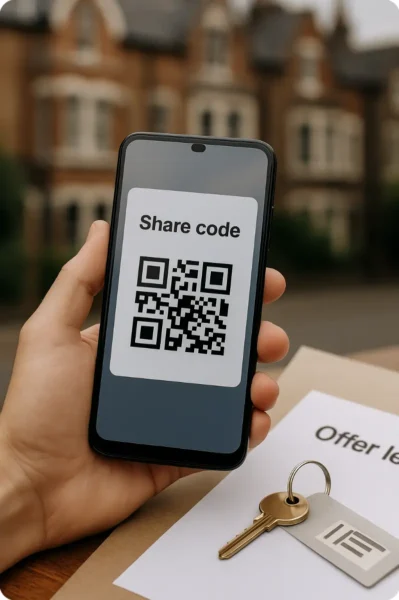
Most new grants are digital. Keep access to your UKVI account, make sure your passport details are up to date, and use a share code to prove your right to work or rent. You’ll give the code and your date of birth; the employer or landlord checks online.
Documents checklist (quick, practical)
- Passports for each applicant (and BRP if still held).
- Relationship proof: marriage/civil partnership certificate; or 2+ years’ durable relationship evidence for unmarried partners.
- Children: full birth/adoption certificates; proof of address (two sources).
- Maintenance funds: bank statements/letters covering the 28-day period (or maintenance certified on the CoS / 12-month exemption).
- Any course/job documents relevant to switching (e.g., PhD study period if moving from Student to Skilled Worker).
FAQs
Can a Skilled Worker dependant work full-time?
Yes. The restriction is narrow: they cannot work as a professional sportsperson or coach.
Can taught Master’s students bring dependants?
Generally no. For new courses, only government-sponsored students (6+ months) or those on qualifying research/postgrad courses can bring family.
How much money do we need to show as a Skilled Worker family?
£285 for a partner, £315 for the first child, £200 for each additional child — unless your sponsor certifies maintenance or you meet the 12-month exemption.
What about Student dependants?
£845 per month in London or £680 per month outside London — up to 9 months — for each partner/child, plus the student’s own living-costs evidence.
What are the usual decision times?
Roughly 3 weeks outside the UK; roughly 8 weeks inside the UK, if using standard service.
Do dependants pay the IHS?
Yes — £1,035 per year for most routes; £776 per year for students and their dependants and for under-18s.
Do these routes lead to settlement?
Often yes. Where the main route leads to ILR (e.g., Skilled Worker), dependants usually qualify after 5 years if they meet the other rules.
How we help
We map the rules to your exact facts, check whether any new restrictions apply to your role, and build a clean, gap-free evidence pack. For employers, we review CoS wording and maintenance certification. For students, we structure the financial evidence so a caseworker can tick it off in one pass. And we flag timing issues early — especially around switching and travel — so you don’t lose time or money.
Disclaimer: UK immigration rules, regulations and government fees are subject to change at short notice. Applicants should consult the latest Home Office guidance and official fee schedules—or seek qualified legal advice—before submitting an application.