If you’re planning to join your spouse in the UK, one of the first things the Home Office will check is your ability to speak and understand English. It’s not just paperwork — it’s part of your eligibility for the visa.
But not everyone needs to take the test. Some people are exempt. Others may already meet the requirement in different ways. This guide breaks it all down: when you need to take a test, which one counts, and when you don’t have to.

What’s the English Language Requirement?
If you’re applying for a UK spouse visa, you need to show basic English skills in speaking and listening. The official standard is CEFR level A1 or higher. You’ll need to pass a Secure English Language Test (SELT) from an approved provider. This applies whether you’re applying from outside the UK or switching visas while in the country.
Most applicants do this by taking a Secure English Language Test (SELT) in speaking and listening.
Approved testing providers:
- IELTS SELT Consortium
- LanguageCert
- Pearson
- Trinity College London
- PSI Services (UK) Ltd (for applicants outside the UK)
You’ll need to:
- Book your test with one of these providers
- Take the test at an approved centre
- Bring a valid ID (passport or BRP)
- Pay the applicable fee
The test must be booked at an authorised centre. You’ll have to bring ID — usually a passport or BRP — and pay the required fee. Make sure to check whether your test result is still valid when you apply (most are valid for two years).
Who Doesn’t Need to Take the English Test?
Some applicants don’t have to take the test at all. Here’s when that might apply:
Age-Based Exemption
You’re automatically exempt if you are:
- Under 18
- Over 65
Medical Grounds
If you have a long-term physical or mental condition that makes it impossible to take the test, you may be exempt. You’ll need evidence from a licensed medical practitioner, usually in the form of a detailed letter or medical report.
Academic Qualifications
You can meet the language requirement without taking a test if you have a:
- UK Bachelor’s, Master’s or PhD degree, or
- Foreign degree taught in English confirmed by UK ENIC (formerly NARIC)
Important: Not all foreign degrees count. You’ll need two things:
- Proof the course was taught and assessed in English.
- A formal statement of comparability from UK ENIC.
Degrees = accepted if criteria above are met
Diplomas, certificates, or short courses = not accepted
Nationality
If you hold a passport from one of the following countries, you’re considered a majority English-speaking national — no test required:

- Antigua and Barbuda
- Australia
- The Bahamas
- Barbados
- Belize
- Canada
- Dominica
- Grenada
- Guyana
- Jamaica
- New Zealand
- Republic of Ireland
- St Kitts and Nevis
- St Lucia
- St Vincent and the Grenadines
- Trinidad and Tobago
- United States of America
Even if you’re exempt from the English test now, be aware that you may still need to pass the Life in the UK Test later — for example, when applying for settlement or British citizenship.
What If I’ve Already Taken a Test?
If you’ve taken a SELT test within the last 2 years, and the certificate shows at least A1 level, you may be able to reuse it — provided it hasn’t expired and still meets the requirements of the visa you’re applying for.
How Long Is My Test Result Valid?
SELT certificates are valid for two years. If your certificate has expired by the time you submit your spouse visa application, you’ll need to take the test again.
However, if you’re applying for an extension or switching from fiancé to spouse visa, you may be able to reuse your certificate if:
- It was previously accepted by the Home Office
- It still meets the level required for your new visa stage
Do I Need a Higher English Level Later On?
Yes — the requirement increases as you move through your immigration journey.
| Visa Type | English Level Required |
| First Spouse Visa | A1 |
| Spouse Visa Extension | A2 |
| Indefinite Leave to Remain | B1 + Life in the UK test |
Each level must be proven through an approved SELT unless you are exempt.
What If I Fail the English Test?
Failing the test doesn’t disqualify you — but it can delay your visa application.
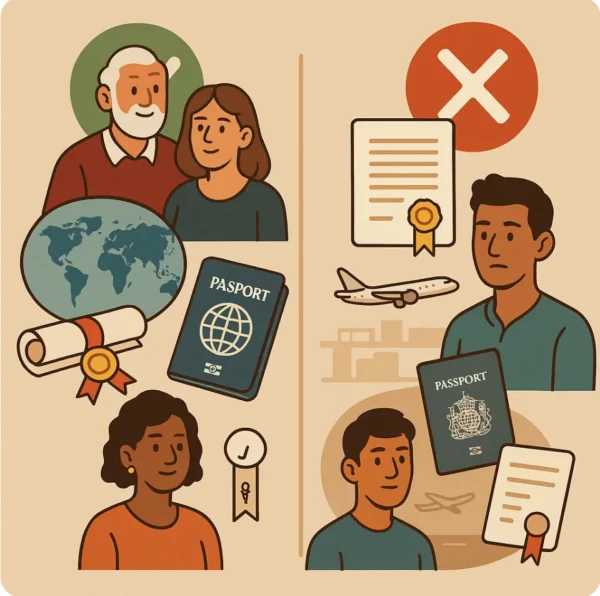
What happens:
- You’ll need to book the test again and repay the fee
- There’s no limit to how many times you can take the test
- You should allow enough time to retake it before your visa deadline
Tip: Don’t leave the test to the last minute. If you fail and your application deadline passes, you may lose your immigration status or need to restart the process.
Quick Self-Check — Do I Need to Take a Test?
Here’s a quick way to check if you need to take the English test:
You do NOT need the test if:
- You’re under 18 or over 65
- You’re from a majority English-speaking country
- You hold a recognised degree taught in English
- You have a long-term medical condition with proper evidence
You DO need the test if:
- None of the above applies
- Your previous test certificate has expired
- You are applying for the first time from a non-English speaking country
Using a Degree to Prove English – What Counts?
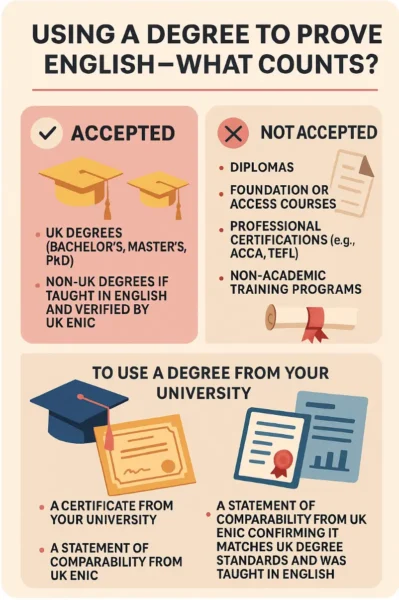
This is one of the most misunderstood exemptions.
Accepted:
- UK degrees (Bachelor’s, Master’s, PhD)
- Non-UK degrees if taught in English and verified by UK ENIC
Not accepted:
- Diplomas
- Foundation or access courses
- Professional certifications (e.g. ACCA, TEFL)
- Non-academic training programs
To use a degree from outside the UK, you’ll need:
- A certificate from your university
- A Statement of Comparability from UK ENIC confirming it matches UK degree standards and was taught in English
Where to Book Your English Test
You can book your SELT with any of the following approved providers:
Always check that you are booking a UKVI-approved SELT at the correct level for your visa type.
Common Questions
What if I’ve already taken the test for another visa?
If your test certificate is still valid and meets the level required, you may be able to reuse it. Check the expiry date and level before applying.
What happens if my partner is fluent but I’m not?
It doesn’t matter if your spouse is a native speaker. The requirement applies to the applicant — you must meet it yourself unless you qualify for one of the exemptions.
Do I need a higher level of English later on?
Yes. If you apply to extend your stay or settle permanently (ILR), the requirement goes up to CEFR level A2 or B1, depending on the route.
Need Advice About Your Visa?
Spouse visa requirements can look simple on paper but are often more complex in practice — especially when documents overlap across multiple visa stages or when timing is tight.
Whether you’re unsure about the test or wondering if your degree counts, don’t guess. Immigration rules change often, and small mistakes can delay your visa or cause it to be refused.
The legal team at Barar & Associates has helped hundreds of clients navigate UK spouse visa applications smoothly. If you want clear, up-to-date advice tailored to your case, we’re ready to help.
Email: info@bararassociates.com
Call: 020 7487 8370
Visit: https://bararassociates.com
Disclaimer: UK immigration rules, regulations and government fees are subject to change at short notice. Applicants should consult the latest Home Office guidance and official fee schedules—or seek qualified legal advice—before submitting an application.