As the UK labour market continues to evolve, sponsor licences have become an essential part of workforce planning for thousands of employers. Across sectors including healthcare, construction, hospitality, engineering, manufacturing, technology and professional services, businesses increasingly rely on international recruitment to address ongoing skills shortages.
However, obtaining a sponsor licence is no longer viewed by the Home Office as a straightforward administrative process. Applications are subject to detailed scrutiny, with employers expected to demonstrate not only that their business is genuine, but also that they have appropriate governance, HR systems and compliance procedures in place before permission is granted.
For organisations planning to recruit overseas workers during 2026 or 2027, preparing a strong sponsor licence application is essential. This means understanding the evidence required, appointing suitable key personnel, ensuring vacancies are genuine and being ready for possible Home Office compliance checks.
This guide explains what employers should expect when applying for a sponsor licence in 2026–2027, the common mistakes that lead to refusals, and how businesses can improve their chances of a successful application.
Why sponsor licences are under greater scrutiny
The UK’s immigration system has continued to develop following recent changes to salary thresholds and sponsorship requirements. As a result, UK Visas and Immigration (UKVI) has placed greater emphasis on ensuring that only compliant, well-managed organisations are permitted to sponsor overseas workers.
Rather than simply checking whether an application form has been completed correctly, caseworkers now examine whether an organisation has the systems, resources and governance needed to meet its ongoing sponsorship duties.
Employers should therefore view a sponsor licence application as the beginning of a long-term compliance relationship with the Home Office rather than a one-off registration exercise.
Understanding the sponsor licence application process
A sponsor licence allows UK organisations to employ eligible overseas workers under routes such as the Skilled Worker route, Global Business Mobility routes and various Temporary Worker categories.
The application process generally involves:
- Completing the online sponsor licence application.
- Paying the relevant Home Office application fee.
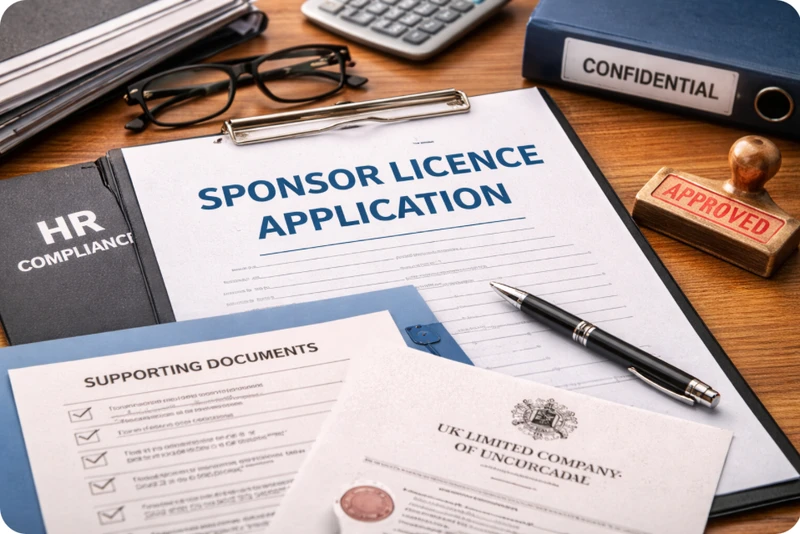
- Providing the required supporting documents.
- Demonstrating that the organisation is genuine, trading lawfully and capable of meeting sponsorship duties.
- Undergoing additional enquiries or a compliance visit where required before a decision is made.
The Home Office assesses both eligibility and suitability throughout the application process. Even where mandatory documents have been supplied, an application may still be refused if UKVI is not satisfied that the organisation understands its ongoing compliance obligations.
Preparing the right supporting evidence
Supporting documentation remains one of the most important aspects of any sponsor licence application.
The Home Office expects evidence confirming that the business is genuine, actively trading and properly established within the UK. Depending on the organisation, documentation may include:
- Certificate of Incorporation.
- Business bank statements.
- VAT registration.
- Employer’s Liability Insurance.
- PAYE registration.
- Recent financial accounts.
- Commercial lease or proof of business premises.
- Industry-specific regulatory registrations where applicable.
Many employers make the mistake of submitting only the minimum documentation.
Where businesses are newly established, part of a wider corporate group or operate within sectors receiving increased Home Office scrutiny, additional supporting evidence can significantly strengthen an application. Documents explaining commercial activity, organisational structure, contracts with clients and staffing requirements often help demonstrate credibility.
Providing a clear picture of how the business operates reduces the likelihood of further enquiries and delays.
HR systems and compliance procedures
Before granting a sponsor licence, UKVI wants confidence that employers can properly manage sponsored workers throughout their employment.
This includes having suitable systems for:
- Right to work checks.
- Employee record keeping.
- Monitoring attendance.
- Recording changes to salaries or job roles.
- Reporting significant changes through the Sponsorship Management System (SMS).
- Maintaining contact details and employment records.
Many employers underestimate the importance of these systems until after a licence has been granted. In reality, demonstrating effective HR procedures during the application stage can substantially improve confidence in the organisation’s ability to comply with sponsorship duties.
Businesses without dedicated HR departments should ensure clear internal procedures are documented before applying.
Choosing the right key personnel
Every sponsor licence requires designated individuals who will manage compliance responsibilities.
These include:
Authorising Officer
The senior individual responsible for ensuring the organisation complies with sponsor duties.
Key Contact
The main point of communication between the organisation and the Home Office.
Level 1 User
The person responsible for managing the sponsor licence through the Sponsorship Management System.
Although one individual can perform multiple roles in certain circumstances, the Home Office expects these appointments to be genuine and appropriate.
Key personnel should usually:
- Be based in the UK.
- Hold a genuine position within the organisation.
- Understand the business.
- Have sufficient authority to oversee compliance.
- Have no relevant criminal or immigration compliance history.
Appointing external consultants to senior sponsor management roles, selecting junior employees without decision-making authority or nominating individuals unfamiliar with the business can undermine an otherwise strong application.
Demonstrating genuine vacancies
One of the most closely examined aspects of sponsor licensing is whether the organisation is recruiting for genuine vacancies.
Meeting salary thresholds alone is not enough.
The Home Office expects sponsored positions to represent real employment opportunities that genuinely require overseas recruitment.
Strong evidence of a genuine vacancy includes:
- Detailed job descriptions.
- Appropriate occupation code selection.
- Realistic salaries.
- Logical reporting structures.
- Clear business need.
- Evidence of recruitment activity where available.
Vacancies should fit naturally within the organisation’s structure and commercial operations.
Applications can attract additional scrutiny where job descriptions appear inconsistent with occupation codes, salaries seem unrealistic or the business cannot clearly explain why overseas recruitment is necessary.
Preparing for compliance visits
UKVI retains the power to conduct compliance visits before granting a sponsor licence as well as throughout the life of the licence.
These visits assess whether businesses genuinely operate as described and whether they understand their sponsorship responsibilities.
Compliance officers may review:
- HR procedures.
- Right to work documentation.
- Employment contracts.
- Payroll systems.
- Attendance monitoring.
- Record keeping.
- Reporting processes.
- Organisational structure.
- Business premises.
Staff responsible for sponsorship should be familiar with the organisation’s policies and able to explain how sponsored workers will be managed.
Well-prepared businesses generally find these visits straightforward, while organisations with inconsistent procedures often experience delays or additional enquiries.
Common mistakes that lead to sponsor licence refusals
Although every application is different, several recurring issues continue to result in refusals.
Incomplete supporting documents
Providing fewer than the required documents, submitting outdated information or failing to supply evidence appropriate to the organisation’s structure can result in immediate refusal.
Weak governance
Businesses sometimes appoint unsuitable key personnel or fail to demonstrate who is ultimately responsible for compliance.
Poorly drafted job descriptions
If the duties described do not correspond with the chosen occupation code or appear significantly below the required skill level, the Home Office may question whether the vacancy is genuine.
Limited HR procedures
Applications frequently fail because employers cannot demonstrate effective systems for monitoring sponsored workers or fulfilling ongoing reporting obligations.
Unclear business structure
Where organisations operate multiple trading names, subsidiaries or group companies, the relationship between entities should be clearly explained. Uncertainty over which company will employ sponsored workers often creates unnecessary complications.
Previous compliance concerns
Historic immigration breaches, civil penalties or previous sponsor licence issues do not automatically prevent approval, but they should be addressed openly with appropriate supporting evidence where relevant.
Practical tips for employers applying in 2026–2027
Businesses considering sponsor licensing should begin preparations well before submitting an application.
Good preparation includes:
- Reviewing the latest Home Office guidance.
- Gathering supporting documentation early.
- Ensuring HR systems are fully documented.
- Training staff responsible for sponsorship.
- Reviewing proposed occupation codes.
- Preparing detailed job descriptions.
- Confirming that key personnel meet eligibility requirements.
- Conducting an internal compliance review before submission.
Treating the application as part of wider corporate governance rather than simply an immigration process often leads to stronger applications and fewer issues later.
How Barar & Associates can help
Sponsor licence applications require careful preparation and a thorough understanding of Home Office expectations. Small errors can lead to unnecessary delays, requests for further information or refusal.
At Barar & Associates, we support businesses across a wide range of industries with every stage of the sponsor licensing process.
Our services include:
- Assessing whether sponsorship is appropriate for your workforce.
- Preparing sponsor licence applications.
- Reviewing supporting documentation.
- Advising on suitable key personnel.
- Helping employers establish compliant HR procedures.
- Assisting with Home Office compliance visits.
- Providing ongoing sponsor licence compliance advice after approval.
Whether you are applying for your first sponsor licence or reviewing an existing licence, our experienced immigration team can provide practical, commercially focused advice tailored to your organisation.
To discuss your sponsor licence application, contact Barar & Associates on 020 7487 8370 or email barar.london@bararassociates.co.uk.
Disclaimer: UK immigration legislation, Home Office guidance and application fees may change. Employers should always refer to the latest official guidance or seek professional legal advice before submitting a sponsor licence application.